
The Repercussions of Tradeoffs
After Focus and Accomplishment

It’s nice to get to focus on a given goal.
It makes life less noisy. It renders unimportant things trivial. It makes a typical day feel more purposeful, being singularly dedicated towards making a specific type of magic happen. And there’s beauty in that.
While this is all good and dandy, it is easy to overlook the things given up in the name of focus and its second order consequences.
Many things are pretty obvious in that they should be given up: screen usage, drinking frequently, toxic friends, etc.
The most difficult things to give up are the things that provide so much value and happiness in life, but detract from whatever is being focused on.
These could be hobbies, friends, interests—whatever that detracts time and energy from the goal in mind.
Giving up these things is making a bet on yourself—you’re betting that your future life from accomplishing whatever you focus on will be better than the present life you have now.
And even if you win this bet and things turn out the way that you wanted to, there still comes the bill of giving up the things you valued.
I’m experiencing this right now when it comes to the gym.
Since I first started going a decade ago, the gym has morphed into an integral part of my self confidence.
My identity is wrapped in the deterministic outcomes that come with lifting heavy things; it’s the closest thing I found that translates discipline and work directly into results without a component of luck.
Last year, I made a bet on myself, giving up gymming consistently to focus on work.
It worked out in the way I wanted to: I found sprouting confidence in my ability to build things people would give money for.
In trade, I weakened what previously bolstered so much of my identity.
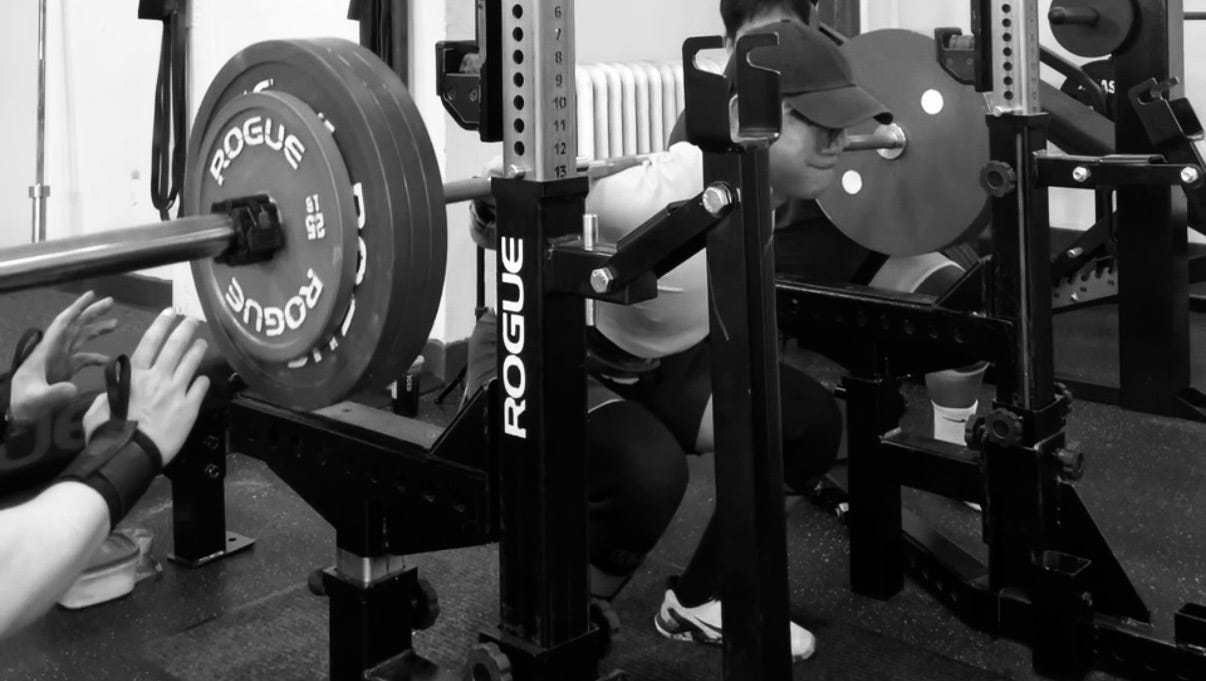
Nothing is more apparent of this tradeoff than when I’m at the gym, squatting with a barbell on my back.
My entire body is weaker.
My knees shake in the hole of my squat. My rear deltoids ache under the barbell’s unforgiving weight. My shoulders struggle with the flexibility to position my arms. My core stifles in the unfamiliarity of breathing and bracing.
What previously was a light warm up is now a top working set.
The barbell does not care about my new engineering skills; it just cares about being lifted.
Even though I’m cognizant of the tradeoff I made, I still feel tinges of sadness when confronted by the deteriorated skill I previously was so effective in.
I wish it were as simple and emotionless as saying, "It was a tradeoff I made to focus on work,” whenever someone asks why I can’t squat what I used to.
It’s never easy giving up cherished things for the sake of focus.
And it never should be.
It is precisely that difficulty that gives the pursuit its value—and makes the focus worthwhile in the first place.
Only after the initial euphoria of accomplishment subsides do I finally return to the long-ignored pieces of what I once held so dear.
I pick them up again and slowly begin to aspire to who I was in those forgotten corners of my life.